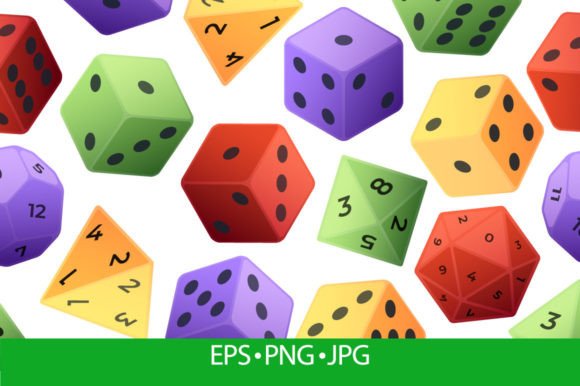
Dice Pattern Seamless Print: A Versatile Design Resource
At first glance, a dice pattern seamless print may appear to be a niche visual asset, suited only for casino-themed parties or role-playing game merchandise. Yet the reality is far more interesting. This repeating texture, built from polyhedral dice of various sides scattered across a background, has found its way into branding, product design, educational materials, digital content, and even fashion. Whether you are a creator searching for a striking background, a business owner looking to build a memorable visual identity, or a hobbyist experimenting with game-related crafts, understanding what a seamless dice pattern offers—and how to choose the right one for your needs—can save you time, money, and creative frustration.
What Is a Dice Pattern Seamless Print?
A dice pattern seamless print is a repeating graphic texture composed of illustrated dice in multiple shapes and orientations. Unlike a single static image, a seamless pattern is designed to tile infinitely without visible seams, making it ideal for wallpaper, fabric, packaging, website backgrounds, or any surface that requires continuous coverage. The dice themselves typically include the classic six-sided cube alongside four-sided, eight-sided, ten-sided, twelve-sided, and twenty-sided polyhedral forms—each bearing random numbers that evoke chance, fortune, and the thrill of uncertainty. Because the pattern is available in vector formats such as EPS and in raster formats like PNG and JPEG, it can be scaled, recolored, and adapted for both print and digital projects without losing quality. This combination of versatility and thematic richness is what makes the dice pattern appealing to such a wide audience.
Why Different People Care About This Pattern
The value of a seamless dice print depends heavily on who you are and what you are trying to achieve. A professional graphic designer may evaluate it for its clean repeat structure and color flexibility. An educator might see it as a visual tool for teaching probability. A small business owner running a board game café may use it to create a cohesive brand experience. A hobbyist working on a custom dice tray or tabletop gaming mat may care most about print resolution and ease of use. Because the pattern touches multiple industries and activities, it is helpful to consider how different readers might approach it with distinct priorities.
Creators and Design Professionals
For those who work with visual media daily, a seamless dice pattern offers a ready-made foundation that saves hours of manual repetition. Instead of constructing individual dice illustrations and arranging them into a tileable layout, you can start with a high-quality vector file and modify it to fit your project. Designers often prioritize flexibility: the ability to change colors, adjust scale, or rotate elements within the pattern. Vector EPS files are particularly valuable here because they allow infinite scaling without pixelation. Whether you are designing a book cover for a fantasy novel, a backdrop for a streaming channel, or wrapping paper for a game store, a well-crafted seamless dice pattern can serve as both a focal point and a subtle texture. The key is to check whether the pattern offers enough variation in dice types and orientations so that the repeat does not look repetitive too quickly.
Entrepreneurs and Small Business Owners
If you run a business related to gaming, entertainment, or even hospitality, a seamless dice print can become a signature visual element. A board game pub might use it on menus, coasters, and signage. An escape room company could incorporate it into promotional materials or wall decals. An online retailer selling custom dice sets may use the pattern as a product photography background that instantly communicates the gaming context. For business owners, cost and commercial licensing are often top concerns. Not all seamless patterns come with a license that permits commercial use, so it is wise to verify the terms before investing. Additionally, consider whether the pattern is available in both print-ready and web-optimized formats. Having a JPEG version for social media posts and an EPS version for large-format printing gives you the flexibility to maintain consistency across channels without rework.
Educators and Hobbyists
Teachers and trainers sometimes search for visual aids that make abstract concepts tangible. A dice pattern seamless print can be used in probability lessons, game design workshops, or mathematics enrichment materials. The physical presence of dice with different numbers and shapes invites discussion about randomness, odds, and decision-making. For hobbyists—especially those who enjoy crafting their own tabletop accessories—the pattern can be printed onto fabric for a custom dice bag, applied to card boxes, or used as a decorative panel for a game board. In these cases, ease of use matters most. A PNG file with a transparent background or a JPEG with a clean repeat makes it simple to upload to print-on-demand services or home printers. Testing the pattern at actual print size before committing to a large run can prevent disappointment with scale or color accuracy.
Key Factors to Evaluate Before Choosing a Dice Pattern
Not all seamless dice prints are created equal, and understanding the differences can help you select one that truly fits your project. Below are several factors to weigh based on your specific goals and skill level.
File Format and Resolution
The same pattern may be offered in EPS, PNG, and JPEG formats, but each serves a different purpose. Vector EPS files are resolution-independent and editable, ideal for professional design work and large-scale printing. PNG files support transparency and are well suited for digital use, especially when layering over other backgrounds. JPEG files are universally compatible and easy to share, but they do not support transparency and may show compression artifacts at low quality. If you plan to print the pattern on physical products, aim for a high-resolution raster file (at least 300 DPI) or a vector file that can be exported at any size. Beginners who only need a simple background for a social media graphic may find a high-quality JPEG sufficient, while experienced creators will likely prefer the control that vector formats provide.
Dice Variety and Composition
A pattern that only contains six-sided dice may feel limited if you are targeting tabletop role-playing gamers who associate polyhedral sets with games like Dungeons & Dragons. Look for a pattern that includes four-sided, eight-sided, ten-sided, twelve-sided, and twenty-sided dice to appeal to that audience. The arrangement also matters: dice scattered at different angles with overlapping orientations create a more organic, less mechanical look. Patterns with consistent spacing and uniform scale are easier to use in large repeats, while more chaotic arrangements work well as accent textures. Think about where the pattern will be viewed. A tight, dense repeat might look excellent on a phone case but overwhelming on a wall mural. Always preview the pattern at the intended application size if possible.
Color and Customizability
Color is one of the most personal decisions in any design project. A classic red-on-black dice pattern evokes traditional casino aesthetics, while pastel tones may suit a whimsical board game theme. If the pattern is offered as a vector file, you can typically recolor individual dice or the background to match your brand palette or personal taste. Some seamless prints come in multiple color variants, which is helpful if you need different looks for different products. For those who are not comfortable editing vector files, choosing a pre-colored pattern that aligns with your vision from the start is the simplest path. Consider whether the pattern includes highlights, shadows, or gradients, as these details affect both print quality and screen display. Flat, clean vector art tends to reproduce more consistently across different media.
Commercial Use and Licensing
If you intend to use the dice pattern for anything beyond personal enjoyment, understanding the license is essential. Some sellers grant full commercial rights, allowing you to use the pattern on products you sell. Others restrict use to personal projects or require attribution. A few may limit the number of copies you can produce. Reading the licensing terms before purchase prevents legal headaches later. If you are a small business owner or freelance creator, prioritize patterns that come with a clear commercial license. If you are a hobbyist making gifts for friends, personal-use patterns are perfectly fine. When in doubt, contact the seller directly to clarify usage permissions.
Practical Examples Across Different Reader Types
To make these considerations concrete, here are a few scenarios that illustrate how the same dice pattern seamless print can serve different needs effectively.
- A board game café owner needs branded coasters, menu headers, and Instagram posts. They choose an EPS vector pattern in dark green with gold dice, matching the café’s color scheme. They use the vector file for printed coasters and export a PNG version for social media. The commercial license covers all merchandise sold in the café.
- A freelance book cover designer is working on a novel about luck and fate. They select a monochrome dice pattern with subtle texture and adjust the scale so the dice appear small and elegant. The seamless repeat works perfectly as a background for the cover type, and the client approves the design on the first submission.
- A mathematics teacher prepares a classroom activity on probability. They print a large-format poster using a high-resolution JPEG dice pattern and ask students to count dice types, calculate frequencies, and discuss randomness. The visual pattern keeps students engaged and sparks conversation about real-world probability.
- A hobbyist crafter wants to sew a custom dice bag for their weekly game night. They download a PNG dice pattern with a transparent background and upload it to a fabric printing service. The pattern wraps around the bag seamlessly, and the polyhedral dice included in the design match the dice set they use at the table.
Aligning the Pattern With Your Own Goals
Determining whether a dice pattern seamless print is right for you comes down to matching its features with your priorities. If you value creative flexibility above all else, a vector EPS file with wide color options and editable elements will serve you best. If speed and simplicity matter more, a ready-to-use JPEG or PNG pattern with a clean repeat saves you setup time. If you are producing physical products, print resolution and licensing become non-negotiable. If your project is purely digital, file size and format compatibility may take precedence. There is no single correct choice, but by considering how you intend to use the pattern and what constraints your project carries, you can make a decision that feels informed rather than overwhelming.
For beginners, starting with a pattern that includes multiple file formats gives you room to learn without locking you into one approach. Experienced users may prefer to source patterns that offer deeper customization or higher commercial flexibility. Either way, a well-designed seamless dice print can elevate your work, communicate a theme of chance and play, and save you the effort of building a complex repeating texture from scratch.
Ultimately, the best dice pattern is the one that fits naturally into your creative process, respects your budget and skill level, and helps you accomplish what you set out to do—whether that is launching a product line, teaching a concept, or simply making something that brings a little luck to the table.