Streaming Overlay Border Design Vector: Building a Professional Broadcast Aesthetic
When you launch a live stream for the first time, the difference between a polished broadcast and an amateur one often comes down to the visual frame around your content. A Streaming Overlay Border Design Vector is not merely decorative. It is a structural element that defines how viewers perceive your channel, how they navigate your layout, and how long they stay engaged. For streamers, content creators, and digital professionals who rely on live or recorded video, an overlay border serves as the boundary between your focal content and the supporting information around it. It creates hierarchy, reinforces branding, and ensures that your audience always knows where to look.
This article explores what a streaming overlay border design vector is, how it fits into a broader production workflow, and how you can integrate it smoothly into your own creative or professional routine. Whether you are launching a new channel, redesigning an existing one, or producing graphics for a client, understanding the practical role of overlay vectors will save you time and improve the consistency of your output.
What Is a Streaming Overlay Border Design Vector?
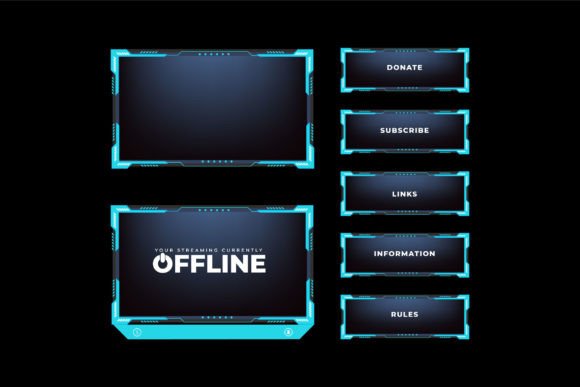
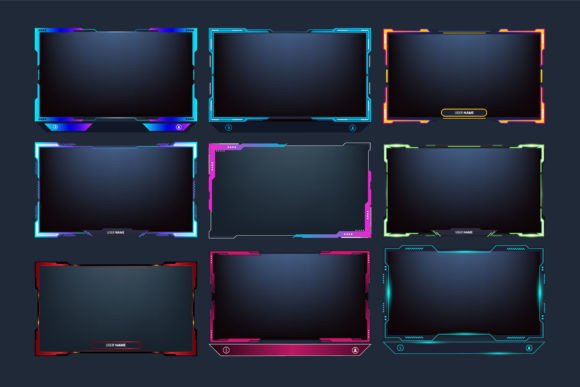
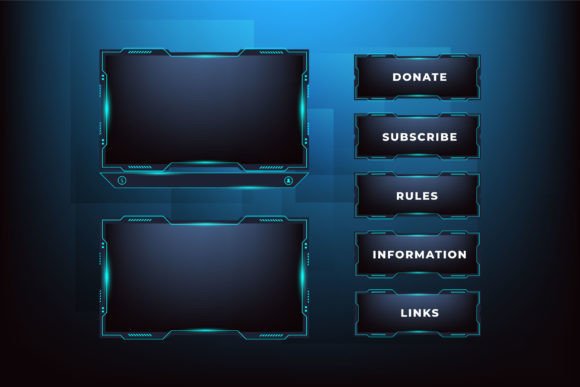
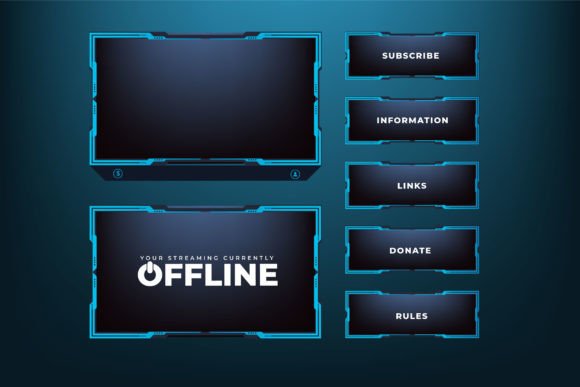
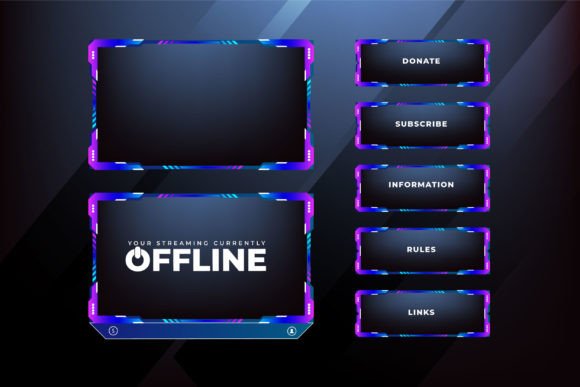
A streaming overlay border design vector is a graphic file that provides the outer framing for a live stream or recorded video interface. Unlike static images that lose quality when resized, vector files are mathematically defined, meaning they scale infinitely without pixelation. This makes them ideal for broadcast work where screen resolutions vary from 1080p to 4K and beyond. The design itself typically includes metallic or futuristic panels, abstract shapes, and color schemes that complement the game or content being streamed. In the case of the Streaming Overlay Border Design Vector available at Iftikhar Alam Graphic Store, the design features pink and blue accents, a simple futuristic panel layout, and a metallic gaming aesthetic that suits a wide range of online game streaming and user interface applications.
These vectors are delivered in both Vector and JPG formats, compressed into a single ZIP file for easy download and organization. Because they are editable in vector editing applications like Adobe Illustrator, you can modify colors, resize elements, or reposition components without starting from scratch. This flexibility is essential for creators who need to adapt a single overlay to multiple games, platforms, or branding guidelines.
Where Streaming Overlay Vectors Fit in a Production Workflow
Understanding where to place an overlay border within your broader production process helps you use it more efficiently. The overlay is not something you add at the last minute. It is a pre-production asset that influences decisions about camera placement, text legibility, and alert positioning.
Before Streaming: Planning and Preparation
During the planning phase, a streaming overlay border design vector helps you map out the visual real estate of your screen. You can open the vector file in your editing software and overlay placeholder boxes for your webcam feed, chat panel, donation alerts, and recent subscriber list. This allows you to see exactly how much space remains for your game or presentation content. By doing this before you go live, you avoid awkward overlaps or off-center framing that can distract your audience.
Preparation also involves checking compatibility with your streaming software. Most modern broadcasting tools support PNG and JPG inputs, but vector files offer an advantage because you can export them at any resolution. For example, if you stream at 1440p but later decide to upload a vertical clip to a short-form platform, you can re-export the same vector file at a different aspect ratio without redrawing the design.
During Streaming: Real-Time Functionality
While you are live, the overlay border serves as a constant visual anchor. Viewers learn to associate the metallic panels and abstract shapes with your brand. The border also helps separate interactive elements. If you enable on-screen chat or subscriber notifications, the border frames these components so they do not bleed into the main content area. A well-designed vector overlay reduces visual noise because it defines clear zones for different types of information. This is especially important for educators, marketers, and small business owners who use live video for tutorials, product demonstrations, or Q&A sessions. The audience can focus on what you are showing or saying without feeling visually overwhelmed.
After Streaming: Repurposing and Archiving
Once a stream ends, the overlay vector continues to provide value. You can use the same design for highlight clips, YouTube uploads, or social media teasers. Because the file is vector-based, you can extract individual elements like the border frame or abstract shape and use them as standalone graphics for thumbnails or profile images. This consistency across platforms strengthens your visual identity and saves you from designing separate assets for every channel.
Archiving your overlay vectors properly is also worth considering. Keep the original ZIP file and extracted AI or EPS files in a dedicated folder alongside your branding assets. When you need to update colors or add new elements for a seasonal event, you have a clean starting point rather than a flattened PNG that is difficult to modify.
Practical Implementation Tips for Different Users
The way you integrate a streaming overlay border design vector depends on your role and technical comfort level. Below are practical approaches for several common user types.
For Streamers and Content Creators
If you are a solo creator, your priority is speed and ease of use. Start by extracting the ZIP file using Win ZIP, WinRAR, or simply double-clicking the archive on modern operating systems. Open the AI file in Adobe Illustrator and check that the dimensions match your stream resolution. Most overlays are designed at 1920x1080, but you can scale the artboard if needed. Adjust the pink and blue colors to match your channel palette. Then export each element as a separate PNG with transparency. Import these into your streaming software as individual sources so you can toggle visibility for different scenes. For example, you might use the full border on your main scene but hide the webcam frame during a full-screen game moment.
One common mistake is applying too many overlay elements at once. The metallic gaming panel design is already visually detailed. Let it breathe. Avoid adding additional glow effects or moving borders that compete with the existing shapes. Simplicity keeps the production looking professional and reduces CPU load on your streaming machine.
For Graphic Designers and Small Agencies
If you are producing overlays for clients, the vector format is a major time-saver. You can open the design in Adobe Illustrator and create multiple variations from a single file. Change the metallic gradient to gold for an esports client, or swap the pink and blue for neon green and purple for a retro-themed channel. Because the abstract shapes are separated into editable layers, you can reposition them to accommodate different camera orientations or logo placements.
When delivering final files to clients, include both the editable vector source and a flattened PNG preview. This gives the client flexibility while ensuring they have a reference for how the overlay should look. Always keep the original ZIP file from Iftikhar Alam Graphic Store as a backup in case you need to revert to the unmodified design.
For Small Business Owners, Educators, and Marketers
You may not consider yourself a streamer in the traditional sense, but if you host live webinars, online classes, or product launches, a clean overlay border makes your broadcast look more credible. The futuristic panel design with pink and blue colors reads as modern and tech-forward, which is appropriate for tutorials, software demonstrations, or brand presentations.
For educational use, the overlay border can frame your slides or your talking head. Place your camera feed inside the main panel and use the side panels for your name, topic title, or social media handle. Because the vector is scalable, you can also use it as a static background for pre-recorded training videos. This creates a consistent look across all your educational content without requiring advanced motion graphics skills.
Integration with Other Tools and Platforms
A streaming overlay border design vector does not exist in isolation. It interacts with your streaming software, editing applications, and asset management system. Understanding these interactions helps you avoid compatibility issues and streamline your workflow.
Streaming Software Compatibility
Most streamers use OBS Studio, Streamlabs, or XSplit. These platforms accept PNG, JPG, and sometimes GIF files, but do not natively open vector formats. Therefore, you must export your vector as a high-resolution PNG or JPG before importing. Export at the exact resolution of your stream to avoid scaling artifacts. If you use multiple scenes, export the overlay elements separately so you can show or hide them as needed. For example, export the main border as one PNG and the side panels as separate files. This modular approach gives you granular control over your layout without cluttering your software with unnecessary layers.
Editing and Customization Workflow
Adobe Illustrator is the recommended tool for customizing vector overlays, but you can also use free alternatives like Inkscape or Affinity Designer if you do not have access to Adobe products. The key is to work in a vector environment so you maintain editability. Once you finish editing, save a copy of the AI file and then export the flattened version for broadcast.
If you need to make quick adjustments during a live stream, rely on your streaming software's built-in transformations instead of reopening the vector file. You can stretch, rotate, or crop the overlay in real time using source filters. This is useful for adapting to unexpected changes, such as a guest joining the stream who needs extra camera space.
File Management and Organization
The ZIP file you receive contains both the vector source and a JPG preview. Extract everything into a dedicated folder named after the overlay design. Inside, create subfolders for editable files, export files, and working drafts. This structure helps you stay organized when you collect multiple overlay designs for different projects. If you ever need to revisit an old design, you can locate the original AI file quickly without digging through unrelated downloads.
If you encounter any problems editing the files, the store owner encourages you to reach out directly. This support is valuable, especially if you are new to vector editing or need clarification about layer structure.
Maintaining Quality and Consistency Over Time
An overlay border is not a one-time setup. As your channel evolves, you may want to refresh the colors, update your logo, or adjust the layout for new content types. Because the design is vector-based, these updates require minimal effort. Open the original file, make the changes, and re-export. This ensures that your visual identity remains consistent even as your content shifts.
Quality control also involves testing the overlay in your actual streaming environment before going live. Preview the scene in your streaming software and check for three things: no elements are cut off at the screen edges, the border does not obscure important in-game information, and the colors render correctly on your monitor. If you stream on multiple platforms, test each one because their player dimensions can differ slightly.
Over time, you will develop a library of overlay variations for different occasions. A metallic gaming panel design works well for regular streams, but you might want a simplified version for charity events or collaborations. Keep your original source files organized so you can generate new versions quickly without recreating the entire layout.
Final Observations on Using Streaming Overlay Vectors
A streaming overlay border design vector is a practical asset that supports your broader production goals. It helps you establish a visual brand, organize screen space, and maintain consistency across live and recorded content. Whether you are a hobbyist streamer, a professional content creator, or a business owner using live video for outreach, the vector format gives you the flexibility to adapt your design as your needs change.
The design available at Iftikhar Alam Graphic Store provides a solid starting point with its metallic panels, abstract shapes, and pink-and-blue futuristic theme. Because it comes in both Vector and JPG formats, and is compressed into a single ZIP file for easy download, you can begin using it within minutes of purchase. Simply extract the files, open them in your preferred vector editing application, and customize to fit your workflow. If you run into any issues, support is available.
By treating the overlay border as a foundational element of your broadcast design rather than an afterthought, you give your audience a clear, professional viewing experience that keeps them coming back.