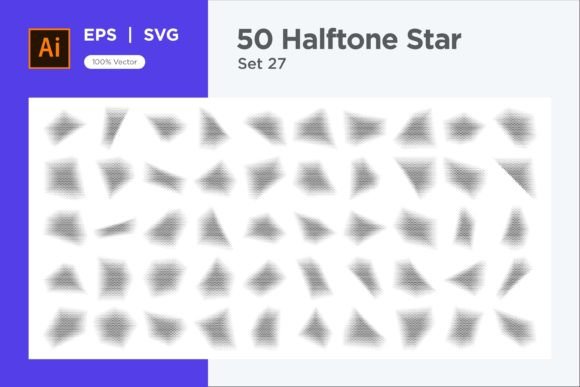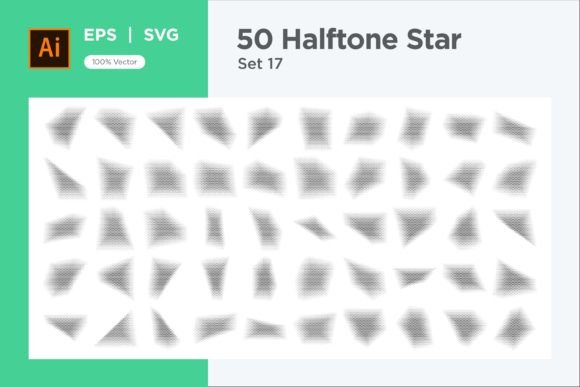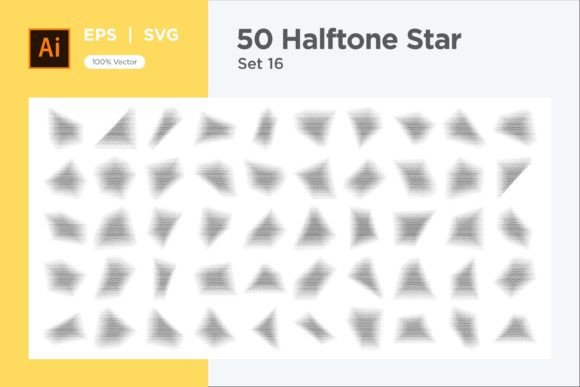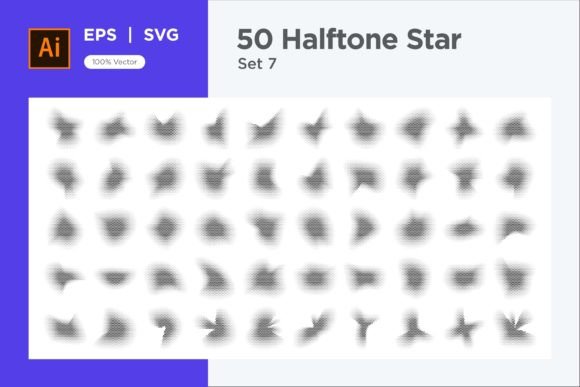
Stars Shape Halftone Background 50-3: What to Know Before You Download and Use It
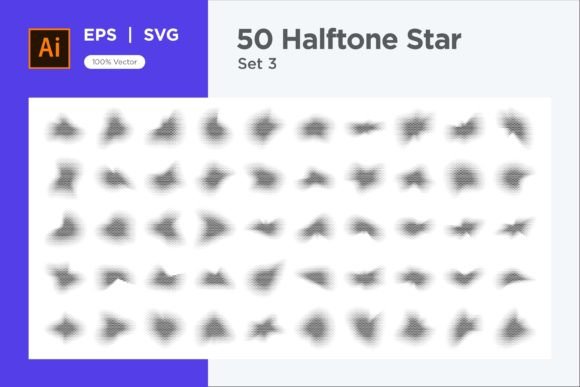
When you are designing a project—whether it is a website background, a poster, a social media graphic, or a product label—the pattern you choose can make or break the entire look. You might have come across Stars Shape Halftone Background 50-3 and wondered if it is the right fit for your work. The description sounds promising: a vector package with 50 EPS and 50 SVG files, fully resizable, and easy to edit. But there is more to using a halftone star pattern effectively than simply dropping it into your design and calling it a day. Many people make avoidable mistakes that cost them time, degrade their final output, or leave them frustrated with the results. Let us walk through what this product actually offers, where people commonly go wrong, and how you can get the most out of it without the headaches.
What Stars Shape Halftone Background 50-3 Really Is
At its core, this is a collection of vector backgrounds built around a repeated star motif with a halftone effect. The halftone technique uses gradients, dot patterns, or varying opacity to create the illusion of depth and texture. Instead of a flat, uniform set of stars, you get a pattern that feels dimensional—almost like a retro comic book page or a dreamy night sky. The package includes 50 EPS files and 50 SVG files, meaning you have options no matter which vector software you prefer. Because everything is vector-based, you can scale the pattern to any size without losing quality. That is a genuine advantage over raster images, which become pixelated when enlarged.
People are drawn to this style for several reasons: it can evoke a nostalgic, playful mood; it works well for children's content, event flyers, or astronomy-themed designs; and it offers a textured look that feels more engaging than a plain solid background. However, the appeal of the pattern can also lead to misuse if you do not consider how halftone designs behave in different contexts.
Mistake #1: Assuming the Pattern Works in Every Color Scheme
One of the most common misunderstandings is that a halftone star background will look good with whatever colors you happen to be using. Halftone effects rely heavily on contrast and value shifts. If you try to use the pattern in a color palette where the stars and the background are too similar in brightness, the halftone texture will disappear. You will end up with a muddy, indistinct mess instead of a crisp, dimensional pattern.
How to avoid this: Before you commit, test the pattern with your proposed colors. The halftone effect works best when there is noticeable contrast between the star shapes and the background—for example, light stars on a dark background or dark stars on a light background. If your brand palette is all mid-tones, consider using a tint or shade of one of your colors for the background so the stars pop. Because the files in Stars Shape Halftone Background 50-3 are fully editable in vector software, you can easily adjust the star colors to match your needs. Do not skip this step; checking contrast early saves you from having to redo an entire layout later.
Mistake #2: Ignoring the Halftone Scale in Different Output Sizes
Another pitfall involves scaling. Because the pattern is vector, you can resize it without resolution loss. That is true in theory, but in practice the halftone dots or gradients can become too large or too small for the intended output. If you blow up the pattern to fill a billboard without adjusting the dot size, the halftone effect may look coarse and pixelated—not from actual pixels, but from dots that are now the size of golf balls. Conversely, if you shrink the pattern down for a business card, the dots may become so tiny that they blur together and lose the halftone texture entirely.
How to avoid this: When you import the SVG or EPS file into your design software, pay attention to the overall scale of the pattern relative to your canvas. Many vector programs allow you to adjust the pattern fill independently of the object it fills. Experiment with scaling the pattern up or down until the halftone effect looks natural at the final output size. A good rule of thumb: view the design at 100% zoom (actual size) and see if the texture reads clearly. If the dots look too busy or too sparse, adjust accordingly. Because the package includes 50 unique files, you may find one that already has a scale better suited to your project.
Mistake #3: Overlooking the Mood and Audience Fit
The star halftone look has a distinct personality. It can feel whimsical, retro, or celestial. That is exactly what you want for a children's book cover, a summer festival poster, or a vintage-themed website. But if you use it for a corporate financial report or a serious medical brochure, the pattern may send the wrong message. It might look unprofessional or out of place simply because the visual tone does not match the content.
How to avoid this: Before you download Stars Shape Halftone Background 50-3, ask yourself whether the pattern supports the emotional tone of your project. If you are designing for a playful brand or an event that benefits from a lighthearted, dreamy aesthetic, this pattern is a strong candidate. If your project requires a more serious or minimalist look, consider using the pattern sparingly—perhaps as a subtle texture overlay at low opacity rather than a bold background. The files are easy to edit, so you can reduce the contrast, lower the opacity, or combine the pattern with a solid color overlay to tone it down. That way you still get texture without overwhelming the message.
Mistake #4: Not Checking File Format Compatibility
The package includes 50 EPS and 50 SVG files. Both are widely supported, but not every software handles them the same way. EPS files are older and can be tricky in some modern applications that have dropped or limited EPS support. SVG files are more universally accepted in web design and newer vector tools. However, if you are using a program like Canva or a mobile design app, you may find that SVG import works fine while EPS does not.
How to avoid this: Before you purchase or download, verify that your software can open the format you plan to use. If you work mainly in Adobe Illustrator, both EPS and SVG will open without issues. If you use Affinity Designer, Inkscape, or a web-based tool, SVG is usually safer. Once you have the files open, take a few minutes to inspect the layers and groups. Well-organized vector files make editing colors and shapes straightforward. If the files are messy, contact the seller for clarification—they have offered support via their profile page or email, which is a sign of a responsible provider.
Mistake #5: Using the Pattern Without Testing Print vs. Screen Output
A halftone effect that looks gorgeous on a high-resolution monitor may print poorly on a standard office printer or on certain paper types. Fine halftone dots can fill in, blur, or create moiré patterns when printed at low resolution or on uncoated paper. The same goes for screen use: a busy halftone background can make text hard to read or cause visual fatigue for viewers.
How to avoid this: Always test the pattern in the medium where it will be seen. For print, do a small test run on the actual paper you plan to use. Check that the dots remain crisp and that the overall texture does not distract from your main content. For screen, view the design on different devices—a phone, a tablet, and a desktop monitor. If the pattern makes text illegible, consider placing a semi-transparent overlay between the background and your content, or use the pattern only in areas where text does not appear. Because the vector files are easy to modify, you can also create a version of the pattern with larger dots or lower contrast to improve readability.
Mistake #6: Buying Without Understanding the License Terms
This is an often-overlooked detail. You are purchasing a set of vector files, but the license determines what you can and cannot do with them. Some packs allow unlimited commercial use; others restrict use to personal projects or limit the number of copies you can produce. If you plan to use Stars Shape Halftone Background 50-3 in a product you sell, on a client's website, or as part of a brand identity, you need to know the license terms upfront.
How to avoid this: Check the product description or the seller's profile for licensing information before you buy. If the license is not clearly stated, send a message through the seller's profile page. Most reputable sellers are happy to clarify. Keep a copy of the license details for your records. This small step protects you from legal issues later and ensures you can use the pattern confidently in commercial projects.
Mistake #7: Relying on the Pattern as a Crutch Instead of a Design Element
Finally, there is a temptation to use a striking pattern like this as a shortcut to make a design look interesting without putting thought into the overall composition. A halftone star background can carry a lot of visual weight, but it should not replace good layout, typography, and hierarchy. When the pattern dominates, the message gets lost.
How to avoid this: Treat the pattern as one layer in your design ecosystem. Give it a defined role—maybe it fills a section behind a headline, or it appears as a subtle texture in the footer. Use the editable nature of the files to adjust the pattern's size, color, and opacity so it supports your content rather than competing with it. A balanced design is more effective and more professional than one that relies entirely on a flashy background.
What to Check Before You Download
Before you click the download button, run through this quick checklist:
- File format: Does your software support EPS or SVG? If unsure, choose SVG for broader compatibility.
- Color palette: Will the pattern contrast well with your brand colors? Can you easily edit the star colors in your vector tool?
- Scale and output: Will the halftone dots look right at your final size and output medium? Test early.
- Mood alignment: Does the whimsical, retro, or dreamy feel fit your project's tone? If not, can you adapt the pattern with opacity or overlays?
- License: Do you have permission for your intended use? Confirm commercial rights if needed.
- Support: If you run into issues, can you contact the seller? The product description mentions support via profile page or email—make a note of that contact information.
Stars Shape Halftone Background 50-3 offers a versatile and visually engaging option for anyone who needs a textured, patterned background with a celestial or retro flavor. The 50 EPS and 50 SVG files give you flexibility, and because they are fully resizable vectors, you can adapt them to projects of any size. But like any design resource, the final result depends on how you use it. By avoiding the common mistakes outlined here—checking contrast, scaling properly, matching the mood to the audience, verifying formats, testing output, understanding the license, and integrating the pattern thoughtfully into your composition—you can save yourself time, frustration, and disappointing results. Take the extra few minutes to plan and test, and you will end up with a polished, professional design that makes the most of what this halftone star background has to offer.