Transform Your Desk with the Mouse Pad 3D Tulip Flower Painting: Avoid These Sublimation Pitfalls
A personalized workspace is more than a trend—it is a reflection of how you work, think, and create. Whether you are a freelance designer, a marketer juggling multiple projects, or a gamer looking for the perfect aesthetic, the items on your desk influence your mood and productivity. The Mouse Pad 3D Tulip Flower Painting Sublimation Design offers a striking, artistic way to upgrade your setup. But turning that digital artwork into a flawless, long-lasting mouse pad requires careful execution. I have seen beautiful designs ruined by small but critical errors. Let’s walk through the common pitfalls so you can achieve the vibrant, professional result you deserve.
Mistake 1: Assuming You Are Buying a Physical Product
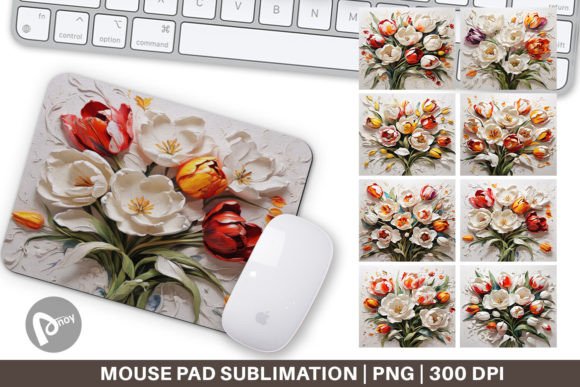
One of the most frequent misunderstandings is the nature of the product itself. The listing clearly states that you will receive a PNG file—specifically, 8 files at 9.5 x 8.1 inches, 300 DPI. You are purchasing the digital artwork, not a finished mouse pad.
This distinction is crucial. If you expect a physical pad to arrive at your door, you will be disappointed. If you understand it is a digital design, you gain complete creative control, but also the responsibility of correct printing.
Better approach: Read the product description thoroughly before purchase. Confirm you have access to a sublimation printer (or a printing service), sublimation ink, and a compatible mouse pad blank. Treat the 8 PNG files as the raw material for your project.
Mistake 2: Using the Wrong Type of Mouse Pad Blank
The "3D" and "Tulip Flower Painting" aspects demand a specific surface. A common error is using an everyday fabric mouse pad or a cheap promotional pad. Standard cloth pads do not have the necessary coating to accept sublimation inks.
When you press the design onto an untreated surface, the colors appear faded, the intricate shadows of the tulips look muddy, and the design can wash or rub off over time. The 3D effect relies on sharp contrasts and vibrant pigments. A low-quality blank destroys that illusion.
Better approach: Invest in a high-quality sublimation mouse pad blank. Look for one with a smooth, bright white polyester coating. This coating is what allows the ink to turn into a gas and bond permanently with the fabric. A good blank makes your 3D tulip design look crisp and alive.
Mistake 3: Mishandling the 9.5 x 8.1 Inch PNG Files
The provided files are precisely sized at 300 DPI. A major mistake is trying to stretch or enlarge these PNG files to fit a larger mouse pad format, such as 12 x 12 inches, within your editing software.
Stretching a raster image like a PNG causes pixelation. The delicate brushstrokes of the 3D tulip painting become blocky, the edges lose definition, and the overall effect looks cheap and unprofessional. You lose the very "painting" quality that makes the design attractive.
Better approach: Use the files for a mouse pad that matches their dimensions or smaller. If you need a larger pad, do not stretch the image. Instead, create a new canvas in your editing software (Photoshop, Canva, or Procreate) at the exact size of your blank. Place the 9.5 x 8.1 inch design in the center and add a complementary border or background around it. This preserves the integrity of the original artwork.
Mistake 4: Getting the Heat Press Settings Wrong
This is where most projects fail. Sublimation is a science. If your temperature is too high or your time is too long, the delicate gradients in the tulip petals will bleed together, turning distinct shadows into a single blurry patch. If the temperature is too low, the ink will not fully gasify, resulting in washed-out, pastel colors that lack the "wow" factor of a 3D effect.
Realistic example: I once pressed a floral design at 400°F for 70 seconds on a thin pad. The red tulips bled into the green leaves, creating a muddy brown halo. The beautiful painting effect was completely lost.
Better approach: Start with standard sublimation settings for mouse pads: 385°F to 400°F for 45 to 60 seconds with medium pressure. However, always perform a test press. Cut a small piece of the design or use a test sheet on a scrap piece of sublimation fabric. Check the color saturation and sharpness. Adjust your time or temperature up or down in 5-degree or 5-second increments until the result is perfect. Every heat press is slightly different.
Mistake 5: Forgetting to Mirror the Image
This is a classic oversight that happens when you are in a hurry. Sublimation transfers the image in reverse. If you do not flip your design horizontally before pressing, the 3D lighting and shadows will appear reversed.
For a tulip painting, this might seem minor, but it disrupts the natural flow of light and depth. If your design contains any text (even a subtle watermark or signature), it will print backward and unreadable.
Better approach: Make mirroring a non-negotiable step in your workflow. In your printing settings or software (like Silhouette Studio, Photoshop, or the printer driver), select the "Mirror" or "Flip Horizontal" option. Double-check it before you print. This simple step prevents a heartbreaking outcome.
Mistake 6: Ignoring the Pad Material and Thickness
Many people focus entirely on the print and forget the construction of the mouse pad itself. A sublimation design can look incredible, but if the pad has a thin, slippery rubber base, it will slide around your desk during intense work or gaming sessions. If the edges are raw, they will fray within weeks.
Better approach: Choose a mouse pad blank with a thick, non-slip natural rubber base (3mm to 4mm is ideal). This provides comfort for your wrist and stability for your mouse. Look for stitched edges, which prevent the fabric from peeling away from the base. A well-constructed pad protects your investment and ensures your 3D tulip art remains beautiful and functional for years.
Mistake 7: Clashing the Design with Your Workspace
The Mouse Pad 3D Tulip Flower Painting is a vibrant, nature-inspired statement piece. A common mistake is placing it into a workspace that is already visually chaotic. If your desk is cluttered with mismatched accessories, the artistic impact of the pad is lost, and the setup looks messy rather than curated.
Better approach: Use this design as the focal point of your desk. It pairs exceptionally well with neutral-colored keyboards (white, gray, or black), minimalist mice, and a clean monitor riser. The rich greens, pinks, and deep backgrounds of the tulip painting bring life to a simple setup. If you are a gamer, let the RGB lighting subtly complement the colors in the flowers rather than competing with them.
What to Check Before You Buy and Press
Before you commit to the project, run through this quick checklist to ensure everything is aligned:
- Do you have the right printer? You need a sublimation printer (like a Sawgrass or an Epson EcoTank converted with sublimation ink). Standard inkjet ink will not work.
- Do you have the right blank? Confirm it is a polyester-coated sublimation mouse pad, not a standard cloth pad.
- Do you have the right tools? You need a heat press (an iron will not provide even pressure or temperature control), heat-resistant tape, and protective butcher paper.
- Are you prepared to mirror the image? This must be done in your print settings before the ink hits the paper.
- Are you ready to test? Never press your final design first. Always do a test print.
Final Thoughts: Creating a Desk You Love
The Mouse Pad 3D Tulip Flower Painting is more than a file—it is an opportunity to bring art into your daily workflow. It can turn a mundane desk into a space that inspires creativity, focus, and calm. By respecting the technical requirements of sublimation and avoiding these common mistakes, you move from simply owning a design to successfully producing a high-quality, personal accessory. Take the time to choose the right blank, dial in your settings, and handle the 8 PNG files with care. The result will be a mouse pad that not only protects your desk but genuinely enhances your environment every single day.